
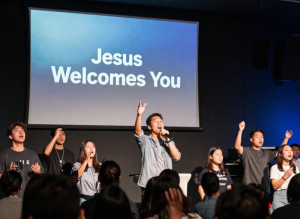
A few Sundays ago, I was preaching at an independent Pentecostal church. There were three things I particularly appreciated about their corporate worship.
1. Preparation
What struck me first was their emphasis on preparation. About 20 minutes before the formal worship began, the congregation was invited to prepare their hearts. During this time, a passage of Scripture—on that occasion, a Psalm—was displayed on the screen, and people were encouraged to meditate on it.
I deeply appreciated this. Too often, we are urged to burst forth with joy in the opening song. But for something as weighty as worship, we need time to prepare our hearts before coming into God’s presence.
Such preparation can include remembering who God is, who we are, and why we come to worship. It can be a time of confession, as we bring before the Lord the sins that weigh upon us. It can also be a time of thanksgiving, recalling God’s goodness over the past week. As we remember His faithfulness, our hearts are stirred with gratitude that naturally leads us into praise.
Many corporate worship services begin with a brief, perfunctory prayer, followed immediately by energetic singing. The transition from living in the world to entering God’s presence is too abrupt. Such a transition deserves careful preparation. We need to be still and recognise that God is here (Psalm 46:10).
2. Invitation
The second thing I appreciated was the way the worship leader began the service. When he stepped forward, he said he was inviting the congregation into God’s presence on behalf of a gracious God.
This stood out to me because I often hear worship leaders inviting God to come into our presence. That has always puzzled me. The gathered church is the living temple of God—He already dwells among us. We do not need to invite Him to join us; it is His house.
As the worship leader rightly expressed, it is God who invites us into His presence. As Jesus says in Matthew 11:28, “Come to me”. We are not the hosts, summoning God as if He were a service provider come to do things for us. He is the Almighty God, and we are privileged to enter His presence through the blood of Christ.
Worship, therefore, must be God-centred and God-initiated, not man-centred or controlled. God is the host and we are His guests.
3. Integration
The third thing I appreciated was their choice of songs. The songs came from different eras—hymns, alongside more contemporary worship songs. But there was a clear thematic unity of the songs chosen. So despite the variety of the music, each song was appropriate, and together they carried the congregation naturally into God’s presence.
This balance is important. Some churches rely only on hymns, while others discard them entirely in favour of modern worship songs. But in Ephesians, we are encouraged to worship with psalms, hymns, and spiritual songs (Ephesians 5:19).
While we cannot be certain of the exact nature of the three types of songs mentioned, psalms probably referred to Old Testament psalms, hymns were songs that spoke explicitly of Christ, and spiritual songs may be more spontaneous, expressions of worship. What struck me was that the early church did not discard psalms for hymns and spiritual songs. Instead, they “thickened” their hymnbook, drawing from the richness of songs from different eras.
God is too great to be worshipped with a narrow range of song choices. It would be unwise to act as though God only moved in the past, or only in the present. Because we love God and desire to glorify Him, we should draw on the best music from every generation. And that is what this church did.
Conclusion
These were the three things that helped me worship God more deeply in that service: preparation, invitation, and integration. These are practices that any church could adopt. Our relationship with God is central to our lives, and while worship extends beyond Sunday, corporate worship is a special time set apart to encounter Him.
We should not be lazy and merely repeat the same patterns week after week without reflection. Instead, we should think carefully about what we do, why we do it, and how it helps us encounter God.
I was truly encouraged that this independent Pentecostal church had clearly put thoughtful care into their corporate worship. It helped me encounter God afresh.