
But let justice roll down like waters,
and righteousness like an ever-flowing stream.
— Amos 5:24
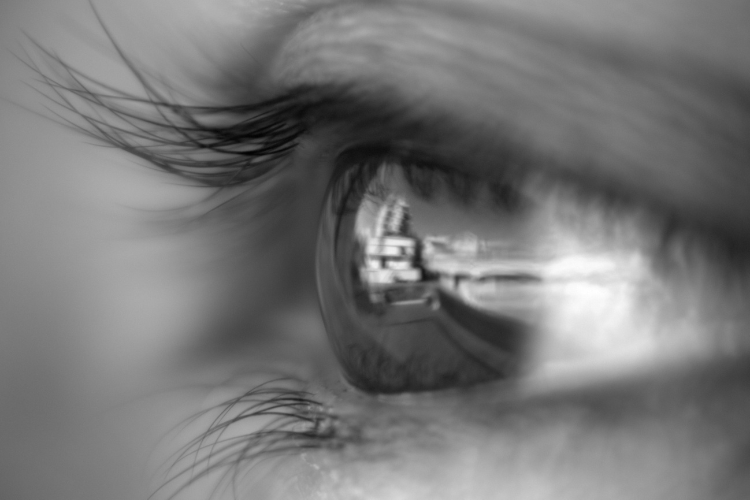
How awake are we even in our waking moments? The philosopher Maxine Greene coined the term “wide-awakeness” out of concern that modern life was becoming more impersonal and automated. She called for a greater consciousness and a fuller attention to our social realities. [1] Like Neo in the science fiction classic movie, The Matrix, we can go through the motions of life, oblivious to larger powers that condition us. That is until we choose, like Neo, to become wide awake and enlightened about the invisible systems governing our lives. To be wide awake, in this sense, does not literally mean the opposite of sleeping. It means having one’s eyes opened to truth, having one’s senses mentally and emotionally attuned to external influences. In short, to be wide awake is to be “woke”.
The term “woke” refers to being alert and attentive to injustices and discrimination. Its roots may be traced to the Civil Rights Movement in the United States. It was utilised in songs by activists protesting discrimination towards African Americans in the 1920s and 1930s. “Woke” underwent a revival in the 2010s following a wake of incidents such as the killing of a black teenager, Trayvon Martin, by a neighbourhood watch in 2012, and the killing of Michael Brown and George Floyd, both unarmed civilians, by white police officers in 2014 and 2020, among others. These incidents sparked the Black Lives Matter movement. “Woke” became a catchword signalling the need to be conscious of implicit racism and systemic injustice. By 2017, “woke” had entered the Oxford English Dictionary and, over time, has been used as a rallying call for greater equity, freedom, and rights for marginalised groups.
In the early days, to be “woke” was regarded as being hip—it meant that one was not naive and ignorant of injustice, that one was a resistance fighter defending those who were oppressed. These days “woke” has become broke. It is a divisive term where paradoxically, the struggle for inclusivity has resulted in exclusivity, and the push for diversity has led to reverse racism.
Take the case of a business professor from the University of Southern California who was discussing how Chinese speakers often use filler words such as 那个 (nà gè) in their everyday speech. The following day, a complaint letter was sent to his superiors. Black members of his class were offended by his use of 那个 which, to them, sounded like the N-word, a racial slur. The professor was asked to stop teaching the class.
However, Chinese international students felt his “cancellation” showed a disregard for communication patterns in Chinese cultures. So, while Black students cancelled the professor in the name of diversity, Chinese students found this culturally insensitive! [2]
“Woke” is so much a part of culture that every other day, one reads of ordinary civilians, celebrities, and politicians being called out for discriminatory behaviour and publicly criticised. Companies increasingly engage in “woke capitalism” where corporations support sociopolitical movements and causes. Relatedly, buyers are demonstrating “woke consumerism” when they place social justice and ethical considerations in their purchasing decisions.
“Woke” has penetrated every aspect of culture, drawing widespread awakening to issues of justice behind what we eat and wear, the language we use, public policies, and cultural practices. Increasingly, the Church will grapple with a young generation exposed to “woke” politics and invested in social justice causes. How can the Church respond in ways that are aligned with biblical principles of justice?
Our first step is to understand that “woke” is a phenomenon of contemporary culture and we should not be apathetic, fully receptive, or dismissive of it. Instead, … we need to adopt a double interpretation to reading the world and the Word. This means that we need to pay attention to world events and acquire the contextual knowledge and skills to interpret influential cultural phenomena, such as wokeism. More importantly, we need to deepen our understanding of God’s Word so that we can interpret the world with discernment.
_____
Excerpted from Suzanne Choo, When Woke Goes Broke: Redeeming Social Justice for the Church (Graceworks, 2024), in commemoration of World Day of Social Justice (20 February). In the book, Suzanne goes on to trace the historical roots of political wokeism and its connections to postmodernism and post-truth. Drawing from the book of Jonah, she provides a Christian approach to social justice (vs. secular wokeism) and concludes with practical applications for churches. This essay has been edited for clarity.
[1] Maxine Greene, Releasing the Imagination: Essays on Education, the Arts, and Social Change (San Francisco, CA: Jossey-Bass, 1995).
[2] Jessie Yeung, “USC Professor Under Fire After Using Chinese Expression Students Allege Sounds Like English Slur,” CNN, September 10, 2020, https://edition.cnn.com/2020/09/10/us/usc-chinese-professor-racism-intl-hnk-scli/index.html.