
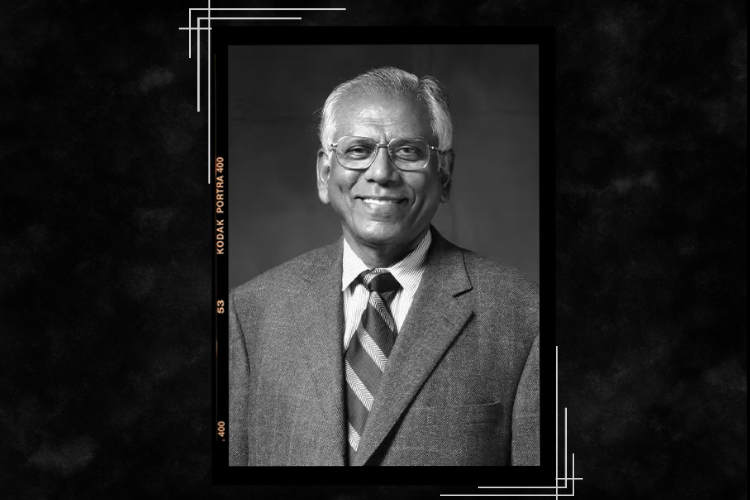
A few days ago, I received news that L. T. Jeyachandran had passed away (23 Nov 2026). He had been ill for a while. Still, when a dear friend passes away, it hits you regardless of whether it was expected or not. I recall I first met L. T. in 2005, at the official launch of Media Associates International (MAI) Asia in Singapore. He was the executive director of Ravi Zacharias International Ministry (RZIM) Asia-Pacific, a role he served in from 2001 to 2012. He was a leader of a major ministry but, in his kindness, he gave me many opportunities to work with him and with RZIM Asia-Pacific. In fact, there was a time when he asked if I would consider joining RZIM, perhaps even to succeed him. I was honoured and struggled with the invitation for a while. I declined because I thought my approach to ministry was more relational than rational, though L. T. would argue that good apologetics needed both. I did serve on the board of RZIM Asia-Pacific, though.
For a long time, I had reservations about Christian apologetics as it was usually practised. It seemed the idea was to demonstrate how Christianity was intellectually superior to other worldviews. When I listened to many apologists, I would come away thinking how clever they were. When I listened to L. T. speak, however, I would come away thinking what a kind person he was. This is no reflection on his intellectual integrity and ability. But he spoke in a winsome way, using imagery that most could understand. This is something that really impressed me about his approach to apologetics. He didn’t just focus on the thinkers, movers, and shakers. He wanted to help all of God’s people to be able to give a reason for what they believed (1 Peter 3:15). This was such a refreshing change from the intellectual elitism that marked so much of Christian apologetics. L. T. did apologetics from a sharp mind and a humble heart.
Underlying his life and ministry was the Word of God. His knowledge of the Word was phenomenal. Not only did he know the Word, he lived by it and showed us how to connect the Word to the realities of daily life. And because he knew the Word, he had a view of life and ministry that took seriously the totality of Scripture. He said that the church often acted as though the Bible started with Genesis 3, humankind’s fall into sin, and ended with Revelation 20, the defeat of sin. They didn’t take seriously the context of God’s dealings with humankind, the created order, the first creation, and the new creation. This was a serious failure that truncated our knowledge of life and our understanding of mission.
What happened to RZIM ministries is now a sad matter of public record. L. T. was one of the people who tried to tell those who would listen that something was amiss in the organisation and its leader. I believe he paid a price for doing so. Still, he showed no anger and kept on serving faithfully till his retirement.
Like a true Christian leader, L. T. encouraged and empowered many who were in ministry. The many messages of condolence that have poured in from all over the world since news of his death emerged is but one evidence of this. I was also a recipient of his nurturing friendship. I recall with fondness the quiet personal chats we had about life and ministry, chats marked by mutuality and transparency, two marks of friendship. I and many others owe him big time. Hence our shock to hear of his passing even though we knew he was ill.
Often, you can fully appreciate a book only after you have read the last chapter. If you have enjoyed the book, you feel sad when the book finishes. You close the book and place it on a shelf. But you know you will read it again. L. T., I will revisit your life many times till we meet again.
One of my final WhatsApp exchanges with L. T.:
SI: Blessed birthday (L. T.). You have impacted my life!
LT: Thank you, Soo Inn – but you have impacted my life as well, proving your own dictum that the Church is a giving receiving community in which no one is indispensable, but everyone is important 🙏🙏.